Become part of our daily lives
And experience a time that will stay in your heart forever
Volunteering
Perhaps the trip of a lifetime
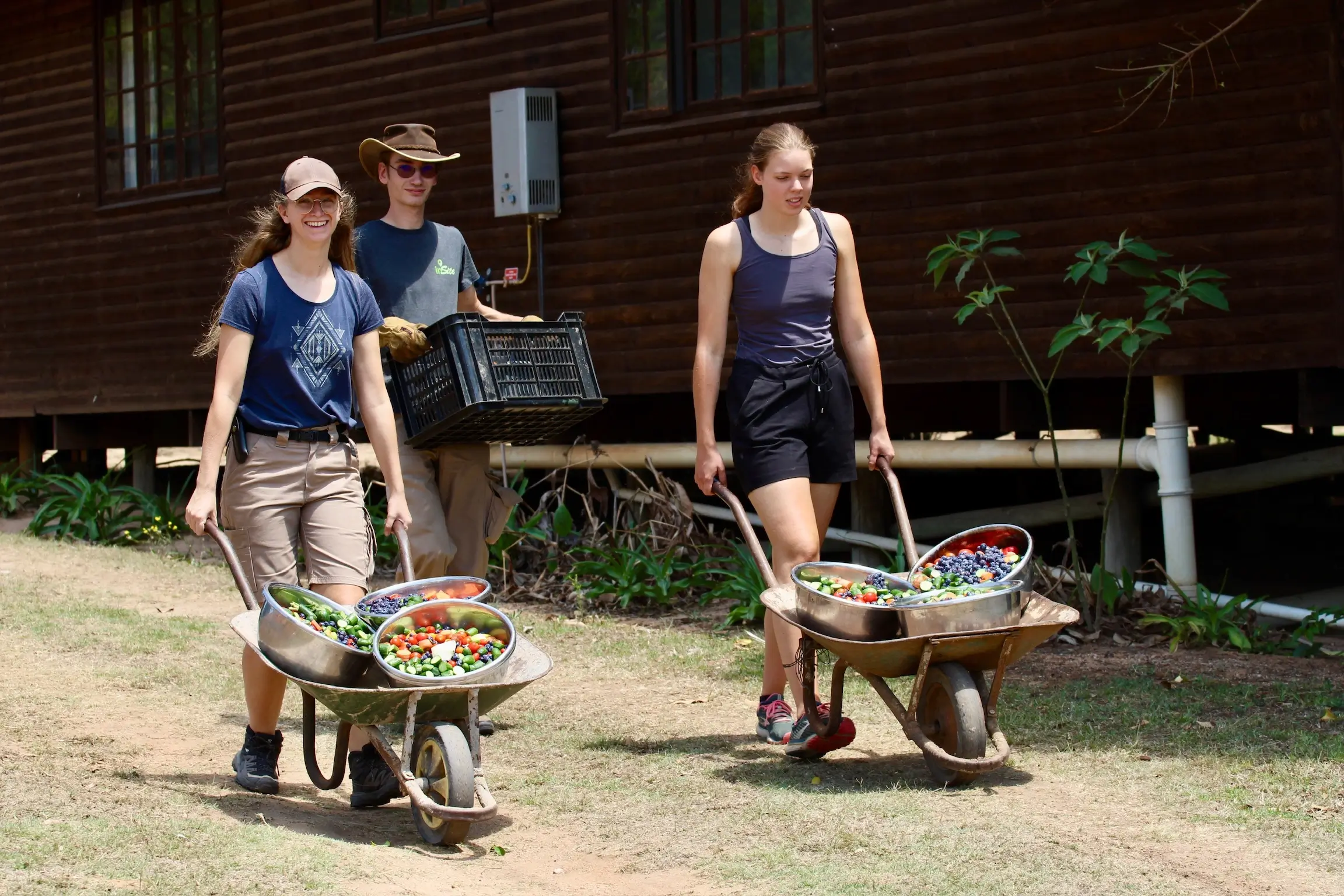
As a volunteer, you’ll become part of our team and experience daily life at a rescue and reintroduction centre set amidst the stunning natural beauty of South Africa, surrounded by the green mountains of Mount Hlumu. You’ll help look after the animals, clean the enclosures and assist with other tasks as they arise, such as repairs, building shelters and maintaining the farm – for example, raking, weeding or tending the vegetable garden.
During ‘Baby Season’, you’ll be able to spend plenty of time with the baby monkeys, bottle-feeding them, giving them baths and watching them play.
The days are filled with physical work, plenty of time outdoors, shared meals and life in a small community. Many describe their time here as restorative and very special. For some, bonds are formed that last long after their time with us has ended.
Living in the heart of nature
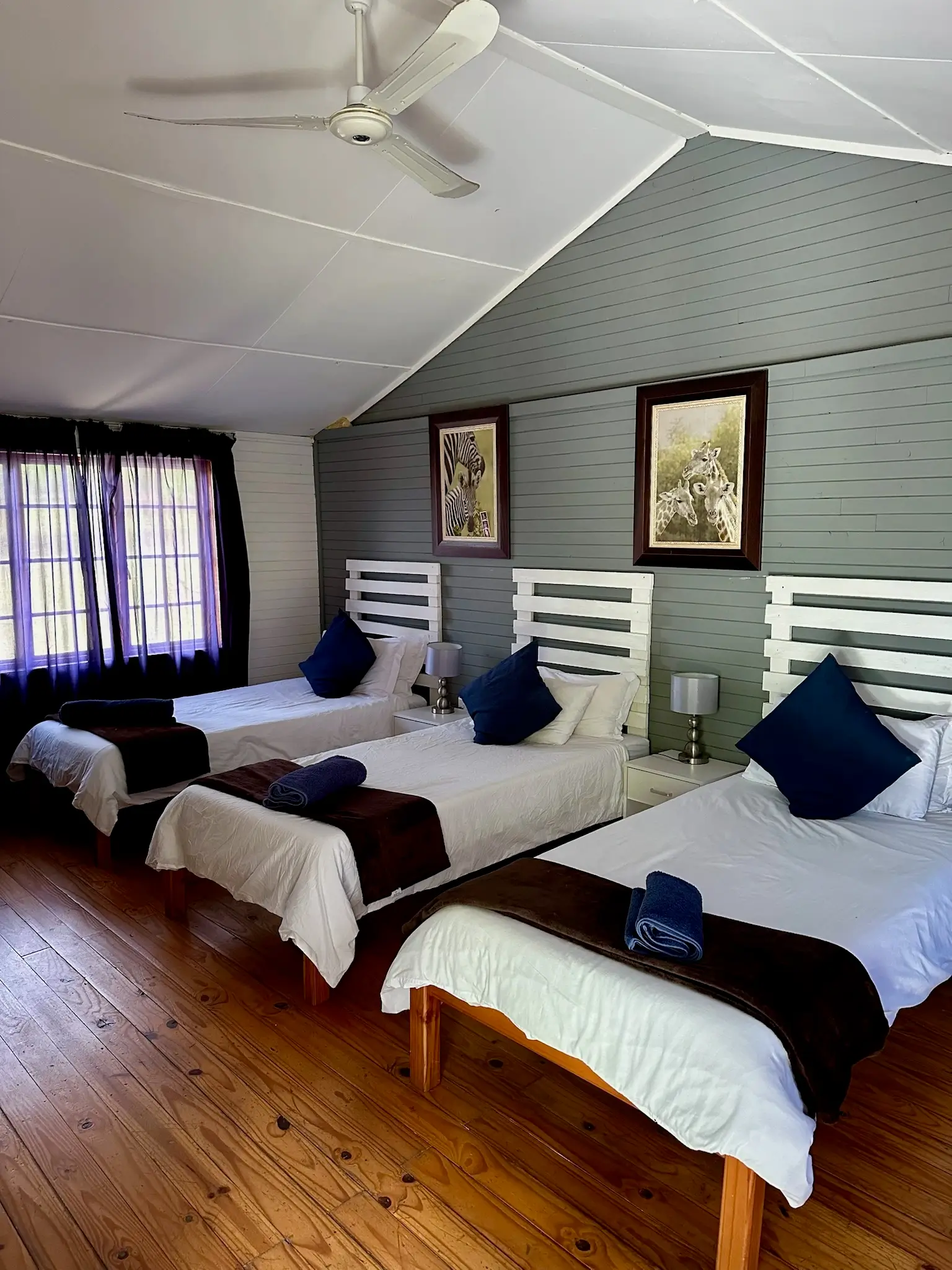
During your stay here, you’ll be staying right on the premises, in the heart of nature. The accommodation is simple, cosy and lovingly furnished.
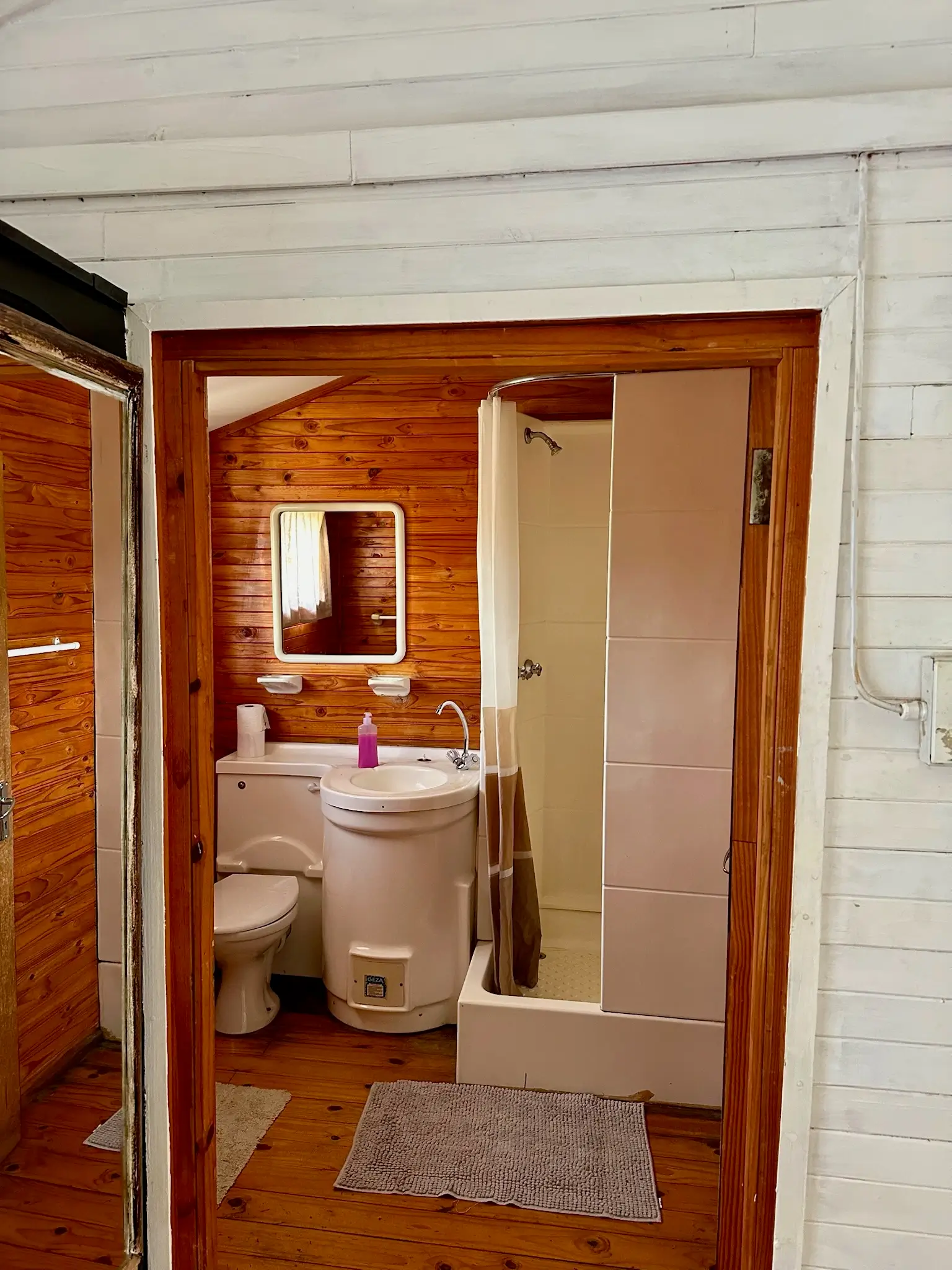
There are twin and triple rooms, and single occupancy is also possible by arrangement. All chalets have their own bathroom. Towels are provided, the chalets are cleaned once a week and there is the option to have your laundry done once a week.
Life here is peaceful, close to nature and far removed from city life. Our volunteers enjoy precisely that: fewer distractions, more time outdoors, more peace and quiet, and more time for conversation and community.
Eating together
Full board is provided. There are three meals a day, all freshly prepared, and we usually eat together. Vegetarian and vegan options are available.
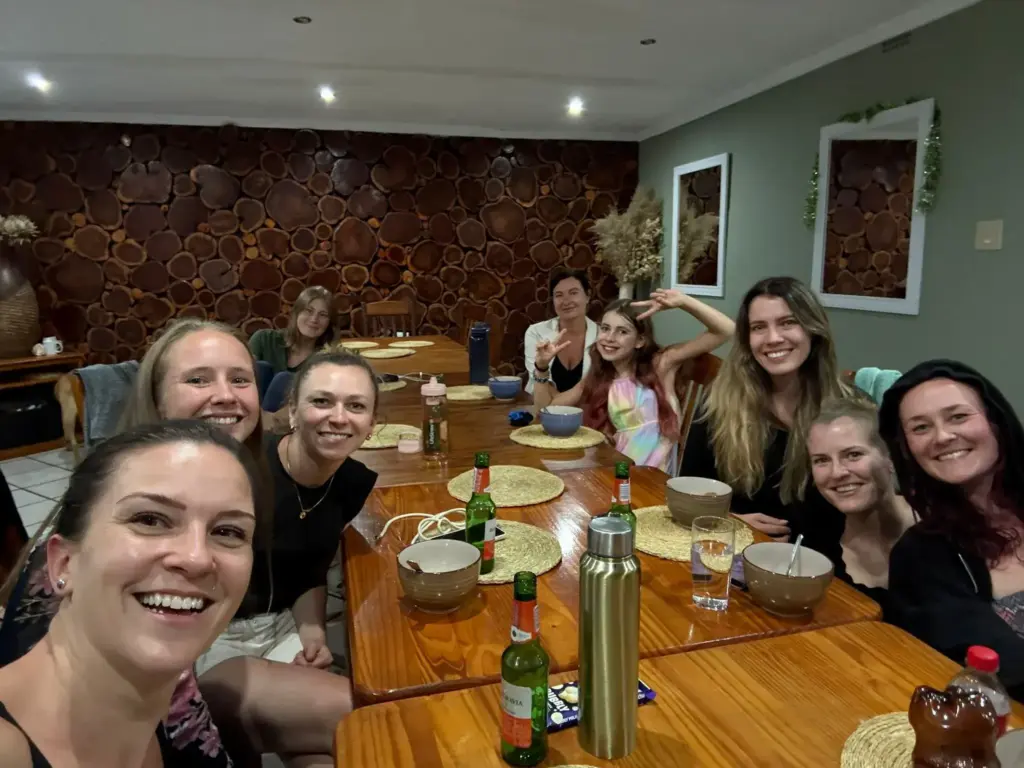
Meals together are an important part of the day. This is where everyone comes together, talks about their day, shares stories and winds down the day together.
Many volunteers say that it is not just the work with the animals, but also these shared moments – living together, the conversations, the laughter, sitting together in the evening – that make their time here so special.
This is what your day as a volunteer might look like
7.00 am – Meeting for coffee or tea
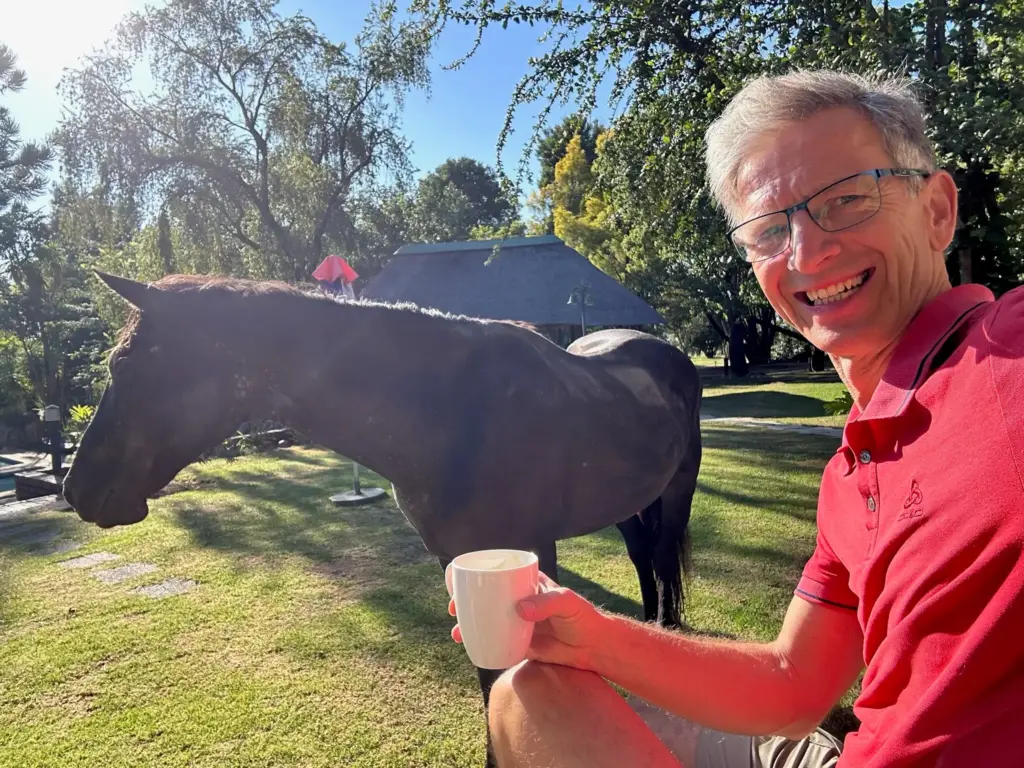
We meet up for a coffee or tea, often whilst it’s still cool in the morning air, as the grounds slowly come to life and the first animals can already be heard. A peaceful start to the day before work begins.
7.00 am – Meeting for coffee or tea
We meet up for a coffee or tea, often whilst it’s still cool in the morning air, as the grounds slowly come to life and the first animals can already be heard. A peaceful start to the day before work begins.
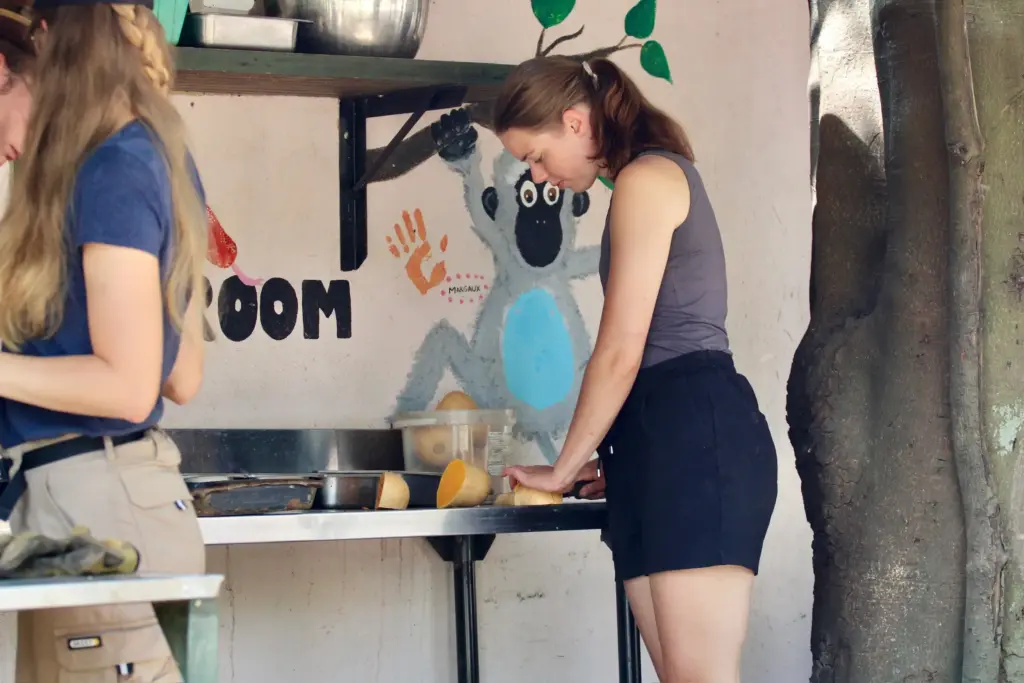
This is when the first round of work for the day begins. Fruit and vegetables are chopped, food is prepared, enclosures are cleaned and everything is readied for the animals. During ‘Baby Season’, this is the time when the baby monkeys are fed, bathed and weighed – a very special experience for many volunteers.
7.30 am – Morning duties
7.30 am – Morning duties
This is when the first round of work for the day begins. Fruit and vegetables are chopped, food is prepared, enclosures are cleaned and everything is readied for the animals. During ‘Baby Season’, this is the time when the baby monkeys are fed, bathed and weighed – a very special experience for many volunteers.
9.00 am – Breakfast
After the morning work, we have breakfast together and take a break. It’s a chance to catch our breath, have a chat and rest for a moment before we carry on.
9.00 am – Breakfast
After the morning work, we have breakfast together and take a break. It’s a chance to catch our breath, have a chat and rest for a moment before we carry on.
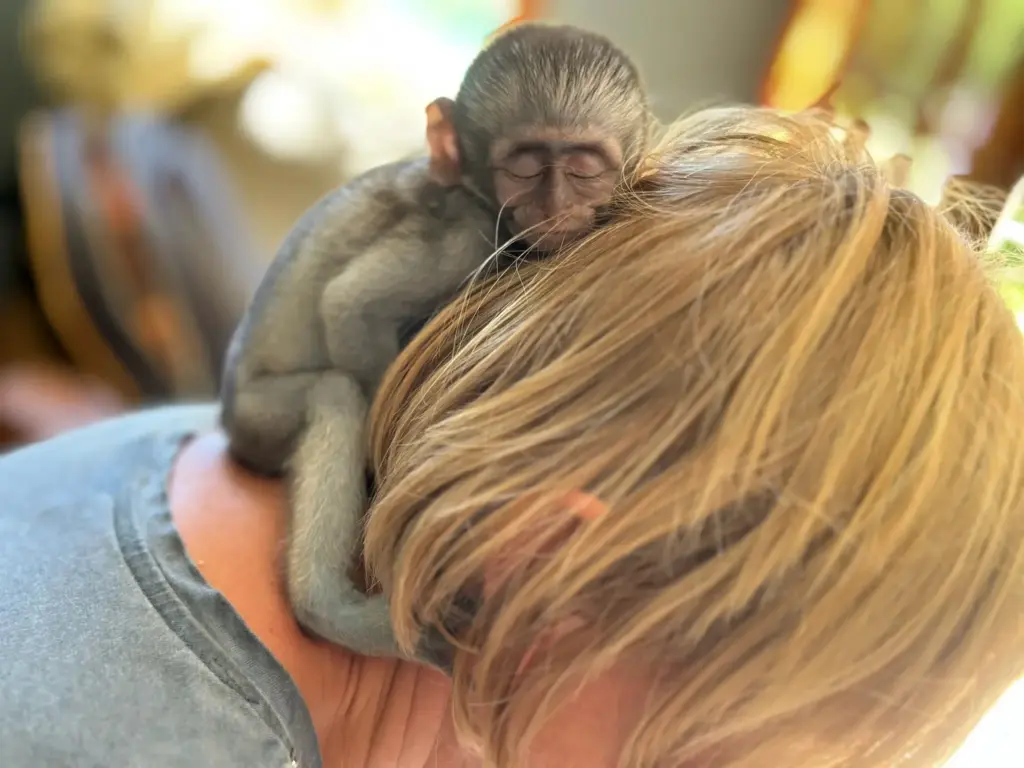
Depending on the day, this is when we tackle maintenance tasks, small-scale construction projects, repairs or work around the grounds. During ‘baby season’, this time is often spent playing and interacting with the baby monkeys. And the odd monkey at the sanctuary is always happy to receive a few strokes too.
10.00 am – Projects, maintenance or baby time
10.00 am – Projects, maintenance or baby time
Depending on the day, this is when we tackle maintenance tasks, small-scale construction projects, repairs or work around the grounds. During ‘baby season’, this time is often spent playing and interacting with the baby monkeys. And the odd monkey at the sanctuary is always happy to receive a few strokes too.
1.00 pm – Lunch
Lunch together and a short break. Many people use this time to sit by the pool or simply enjoy the peace and quiet and the natural surroundings.
1.00 pm – Lunch
Lunch together and a short break. Many people use this time to sit by the pool or simply enjoy the peace and quiet and the natural surroundings.
The animals are fed again in the afternoon. Afterwards, there’s often time to watch the monkeys – a moment that many volunteers particularly love, because you can simply sit there and watch them play, climb and interact with one another.
2.00 pm – Afternoon feeding & watching the monkeys
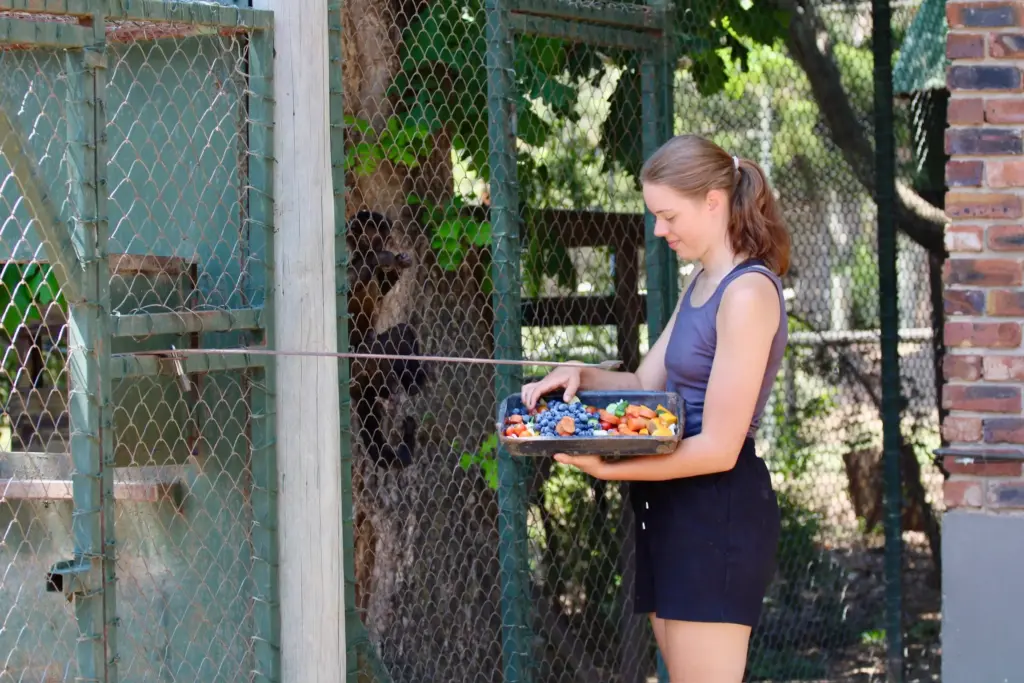
2.00 pm – Afternoon feeding & watching the monkeys
The animals are fed again in the afternoon. Afterwards, there’s often time to watch the monkeys – a moment that many volunteers particularly love, because you can simply sit there and watch them play, climb and interact with one another.
4.00 pm – End of the working day

From now on, you’re free to do as you please – whether that’s a dip in the pool, a spot of reading or simply relaxing.
4.00 pm – End of the working day
From now on, you’re free to do as you please – whether that’s a dip in the pool, a spot of reading or simply relaxing.
In the evening, we have dinner together. This is when everyone gets together to chat about their day, have a laugh, make plans for the next few days, or simply sit together for a while under the starry sky.
6.00 pm – Dinner together
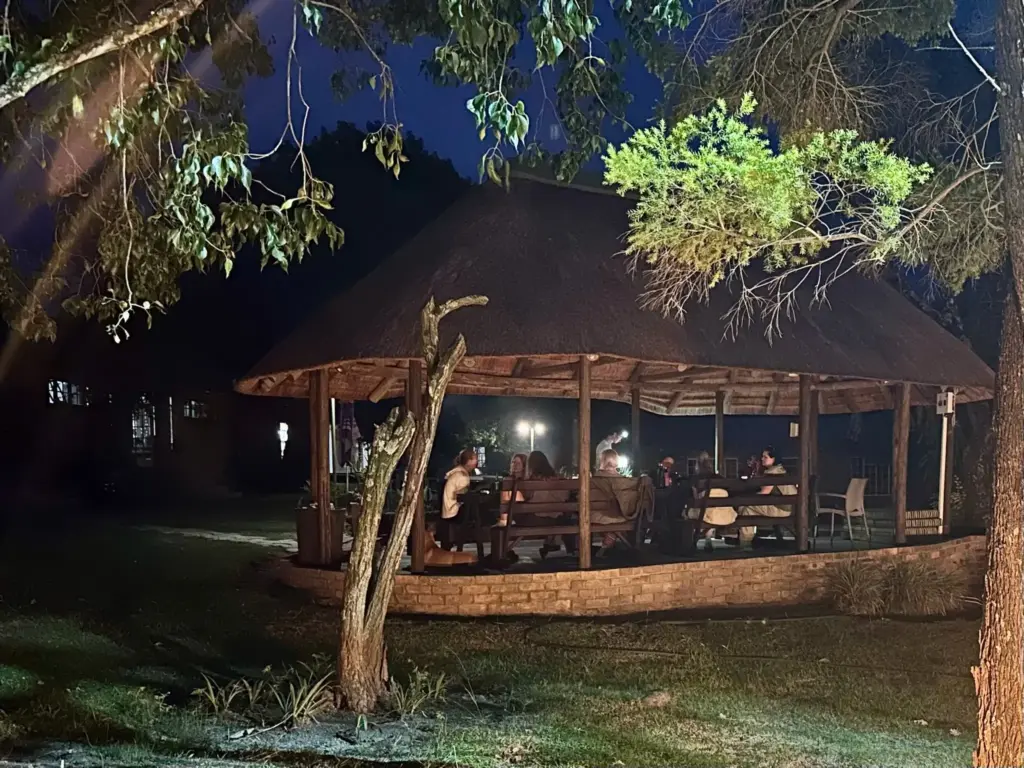
6.00 pm – Dinner together
In the evening, we have dinner together. This is when everyone gets together to chat about their day, have a laugh, make plans for the next few days, or simply sit together for a while under the starry sky.
Time to get to know the country
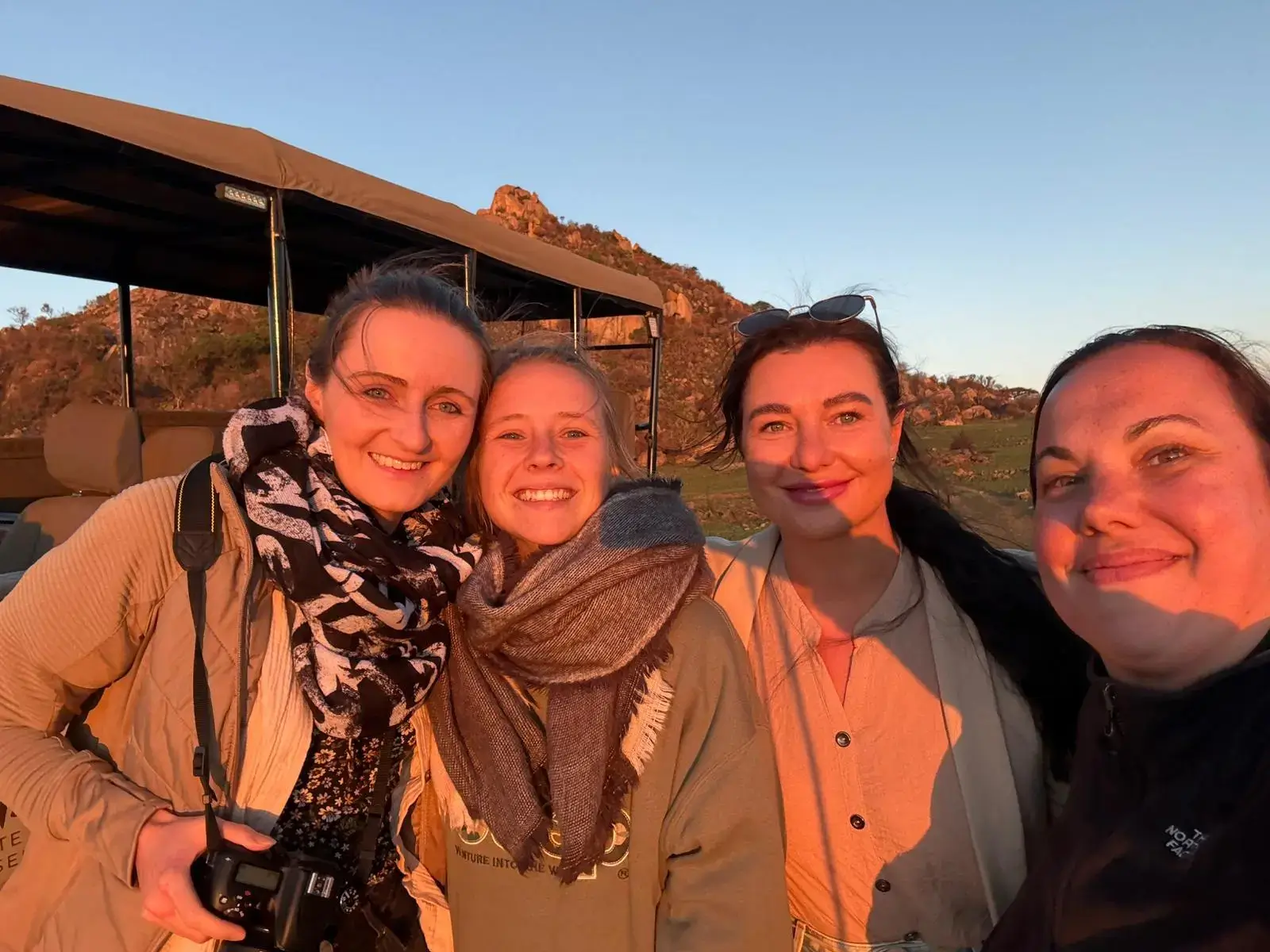
As well as your work, there’s also time to explore the local area and experience South Africa. This includes excursions, safaris, visits to the nearby dam – including a boat trip – trips to restaurants, or simply spending your free time on the premises.
We organise the excursions in collaboration with local partners and tailor them to your preferences. This gives everyone the chance to get to know the country and its wildlife alongside their work.
Many volunteers say that it is precisely this mix of work, nature, community and experiences that makes their time here so special.
How to get here
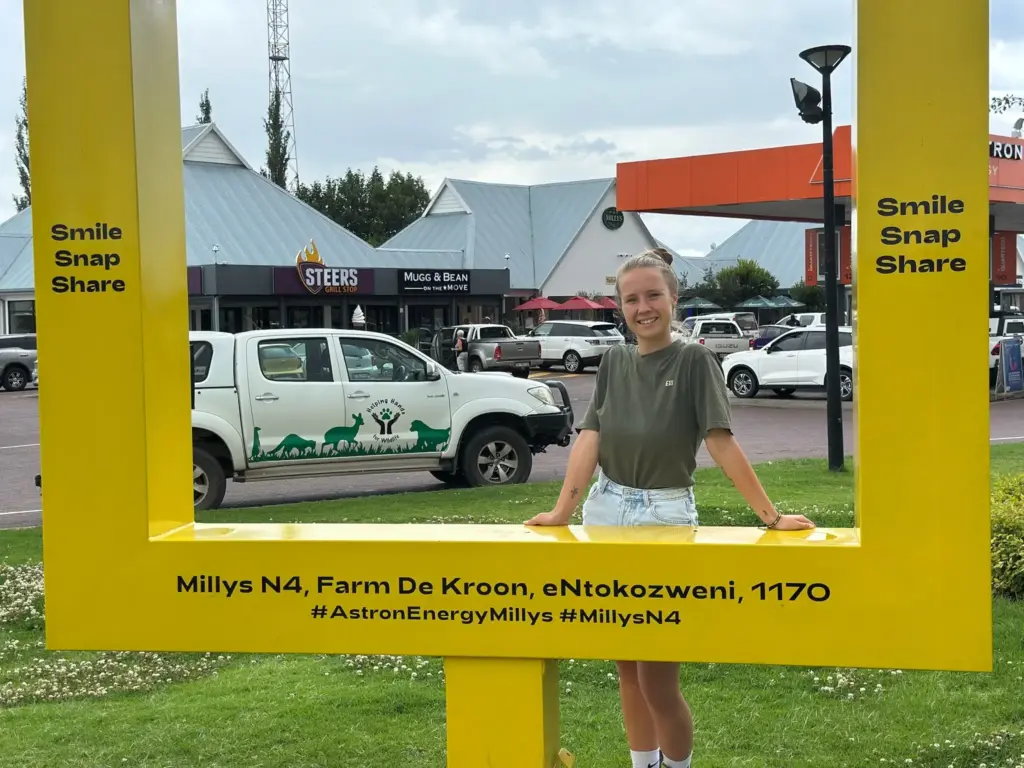
You’ll arrive via Johannesburg Airport. From there, it’s about a two-hour bus journey to Millys, where we’ll pick you up.
The journey is straightforward and safe, and we’ll help you plan in advance so that you know everything you need to and can travel here with peace of mind.
Accommodation & Prices
-
1 week (in a 3-bed chalet) €790 per person
-
2 weeks (in a 3-bed chalet) €1.190 per person
-
3 weeks (in a 3-bed chalet) €1.490 per person
-
4 weeks (in a 3-bed chalet) €1.790 per person
-
from 3 months (in a 3-bed chalet) €1.200 per person
-
Double chalet plus €9 per person per night
-
Single chalet plus €18 per person per night
Included in the price: accommodation with full board, weekly cleaning of the chalet, laundry service once a week and collection from the coach station in Millys.
Flights and coach transfers from the airport to Millys must be booked separately (see FAQs).
*The invoice will be issued in South African rand (ZAR). The euro amounts shown are for guidance only and may vary slightly depending on the current exchange rate.
Become a volunteer
A look behind the scenes
What people who have been here have to say
We – two lads from Germany – spent two and a half weeks at Helping Hands for Wildlife and can say with complete conviction: it was one of the most wonderful, intense and life-changing experiences of our lives. From the moment we arrived, we felt welcome and at home. The warmth and kindness of Elli, who organises everything with such passion and care, was immediately apparent. She is the heart of the farm – always there, always approachable, and so down-to-earth and genuine. Our lodge was immaculately maintained, cosily furnished and had a superb bathroom. Working with the animals was incredibly fulfilling. Whether it was feeding the monkeys, cleaning the enclosures or simply watching the animals regain their trust – every day had its special moments. Micky, the meerkat, was particularly close to our hearts. There were evenings when he was allowed to sleep over at our place – an experience we’ll never forget. The baby monkeys also made us laugh every day. The sense of community with the other volunteers was incredibly strong. People from Switzerland, France and South Africa, and yet it felt like a little family. We cooked together, watched films in the evenings, sat round the campfire, played pool together and talked about life over a cool gin and tonic. The weekly barbecue was a particular highlight – good food, good conversation, good music. The surroundings were brilliant too: the well-maintained pool beneath the lilac-coloured tree, the golf course just nearby, and the charming town of Badplaas, where you were always given a warm welcome. This time together not only brought us even closer as friends, but also changed our outlook on life. You learn what it means to take responsibility, to treat animals and people with care, and just how much energy goes into genuine, honest work. We’ll definitely be back. It no longer feels like a place we’ve visited – it’s a place that has become a part of us.
Jussi and Kilian from Germany
Any questions?
Is there a minimum length of stay?
No, but we recommend a stay of two weeks, as it usually takes about a week to get to grips with all the tasks on the farm.
Do I need a visa?
No visa is required for a short stay in South Africa. A passport is sufficient. Your passport must be valid for at least 30 days from the date of entry and have at least two blank pages for stamps.
Where can I book the coach transfer?
Is there a risk of malaria in the region?
The farm is not located in a malaria-risk area, so no specific malaria medication is required. As always, however, it is advisable to take the usual precautions against mosquitoes.
Which vaccinations are recommended for the trip?
Rabies and tetanus vaccinations are recommended for the stay.
Where is the farm located?
The station is in Badplaas, near Nelspruit.
What language skills are required?
English is an advantage, but not essential. The project leader, Elli, is German, and many volunteers come from Germany. However, if you’re travelling on your own, you should be able to make yourself understood at the airport and on the shuttle transfer.
What does the work involve?
How closely do you work with the animals?
Whilst direct contact with the adult primate groups is deliberately avoided, you’ll have the opportunity to get closer to the babies and some of the animals at the sanctuary in particular. Particularly during the baby monkey season, you’ll play an active role in rearing them. The little monkeys are fed, looked after and closely monitored by volunteers – sometimes even at night. During this time, a strong bond develops, as the animals rely on closeness and care. There are also animals at the sanctuary that are accustomed to human contact and with whom a cautious, respectful approach is possible. At the same time, it is an important part of our work to keep direct contact with primate groups that have been released into the wild or are ready for release to a minimum. In this way, we ensure that they retain their natural instincts and can survive in the wild in the long term.
Are there any dangerous animals on the farm, such as snakes?
Yes, there may be dangerous snakes or spiders on the farm. Our staff are fully trained in handling the animals. The chalets are built on raised platforms so that snakes and spiders cannot get inside (provided you keep the windows closed).
Is it possible that the monkeys might bite?
Monkeys are wild animals and can bite, although this is very rare. A rabies vaccination is therefore recommended. You’ll receive a comprehensive briefing on site and will always have someone by your side. You’ll never be forced to enter a cage if you don’t feel comfortable doing so.
Do I need any special clothing?
Comfortable clothing and sturdy, waterproof footwear will do. You should also remember to bring a hat for sun protection. Once you’ve booked, we’ll send you a packing list as well.
Join our community
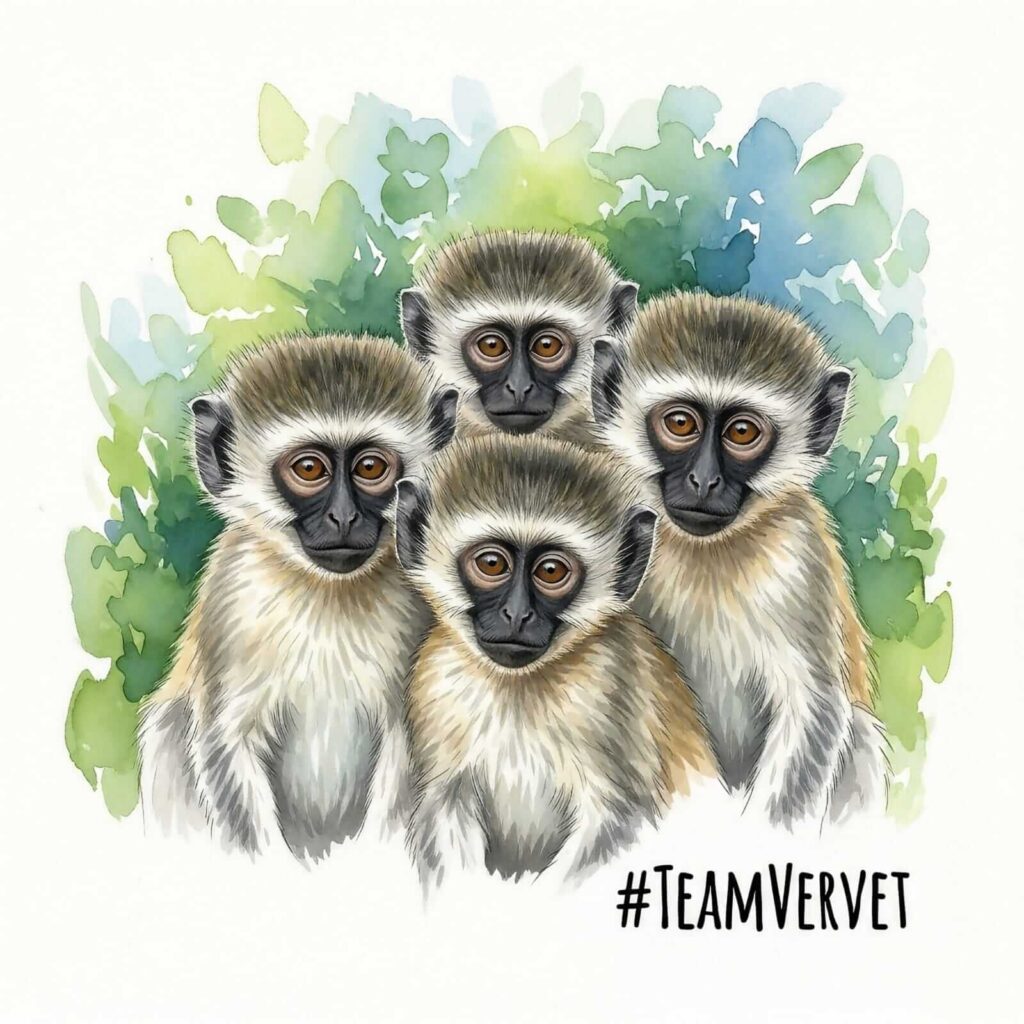
Helping Hands for Wildlife thrives on the support of people who share our vision. #teamvervet brings together people from all over the world who want to take responsibility and make a real difference.
Join us on our journey – together, we’ll give orphaned and injured animals a second chance.